Site Navigation

Showing posts with label economics. Show all posts

World's Fair of Rare Digital Art

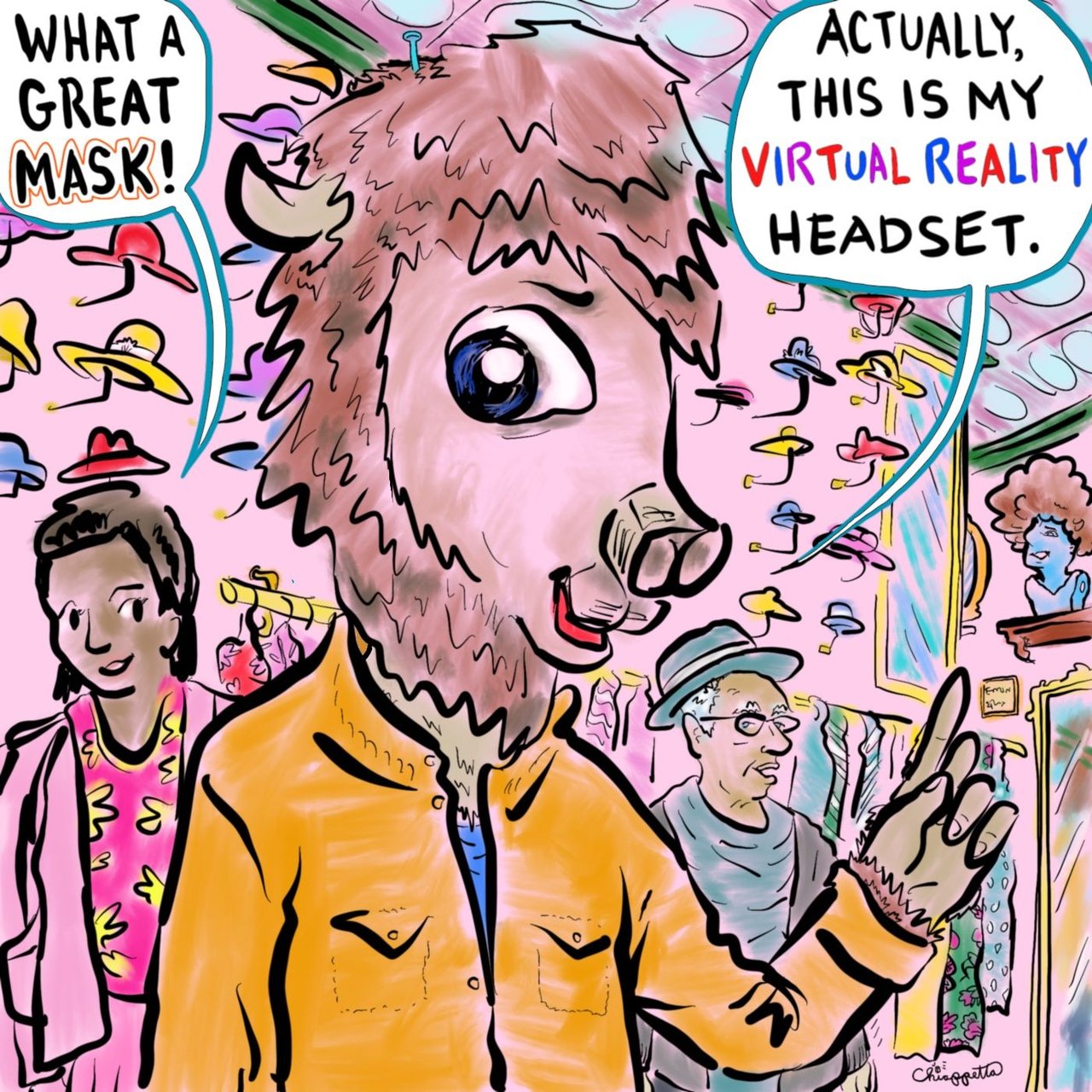
Where the Buffalo Browse is rare digital art by Joe Chiappetta
Where the Buffalo Browse is rare digital art by Joe Chiappetta, available on Atomic Hub Marketplace. While this cartoon pokes fun at virtual reality culture, behind the fun just might be an economic revival for the art industry--the likes of which has never been seen--at least not while wearing a buffalo helmet.

World's Fair of Rare Digital Art:

Digital Art Needs a Multidimensional Digital World

Joe Chiappetta, February 2021

When virtual reality (VR) becomes user-friendly, affordable, with universal technical standards integrated from online gallery to gallery, the art-loving world could see a revival more influential even than the Italian Renaissance. Indeed, everyone (with internet access) could witness this World's Fair of Online Art, open 24-7, poised to impress and built to buy/sell rare digital art as if you were floating through a game-like world because... well... because you would indeed be floating through a game-like world--virtually speaking. Such a place would have free admission for all, economic opportunity for all, and operate in 4 virtual dimensions of height, width, depth, and the dimension of "Wow, this is awesome!"

Of course, online 3-D digital worlds are nothing new, as any player of Minecraft or Second Life will tell you. Neither is cryptocurrency a new thing. In fact, all 3 of these systems have been operational for over 10 years. Yet what would happen if a 3-D digital world were well-integrated with digital art, community equality, and cryptocurrency? It could become the art industry's "killer app."
Silly Daddy VR Helmet is rare digital art by Joe Chiappetta
Silly Daddy VR Helmet is rare digital art by Joe Chiappetta, available on Atomic Hub
At 64 billion dollars for 2019, the global art market saw a decline in sales from the previous year. While 2020 statistics are not compiled yet, it is likely that this figure will be even lower. With fast transactions and borderless payment power, some are scrambling to declare cryptocurrency as the soon-to-be savior of a slumping global art market. 

However, the truth is at least a little more complex. Made possible by cryptocurrency, a small but excited number of people do collect rare digital art. But most in the art world still have no idea what such terms really mean.

What is rare digital art? It's online creative work tied to cryptocurrency that has been released in limited quantities, verifiable on a blockchain. For those in need of a refresher on what cryptocurrency is, think of it as coded internet money or credits released (usually) by entrepreneurs in specific predefined amounts. I should know; I have been researching and writing about this space for many years. In fact, I'm one of those rare digital art collectors. Many know that I am also a pretty prolific rare digital artist and educator in this space as well.

If you are just joining the rare digital art industry now, don't think you are late to the party. While rare digital art is 6 years old, the earliest pioneering developments from 2014 were not widely publicized and very slow in adoption (running on top of Bitcoin, often using Counterparty). Indeed, the first 4 years of rare digital art went by without much notice. Even now, the mainstream art world remains quite slow to completely jump on the bandwagon. So we are still in the very early days of rare digital art! For example, the Italian Renaissance lasted about 200 years, and some art historians find traces of the Renaissance roughly 100 years prior to its start through the work of Giotto. 

Whether the Italian Renaissance lasted 200 or 300 years, is not the point. Rather, it is significant that when a new movement starts, the early years of that movement are never as defined as historians make them out to be. Therefore if you are in rare digital art now, congratulations, fellow pioneer! You will be one of the early ones to help define and further shape it.

Since we are the early adopters, the question at hand is "Where do we go from here?" The first step is to soberly see where we really are now. The practice of buying rare digital art is only slowly being adopted by mainstream art collectors, and much of the rare digital art industry is dominated by speculators looking to make a quick profit flipping art. 

As an old-school physical collector turned rare digital art collector, I am not a flipper or speculator. In fact, of the many rare digital artworks in my collection, I rarely sell pieces from my collection. That is because I acquired the art in the first place because I wanted it for the fun of it. The art spoke to me in a unique way and simply made me happy. So if I can add such a piece to my collection, I will, and not worry about whether or not I can make money off of it later.
Zine Machine is rare digital art by Joe Chiappetta
Zine Machine is rare digital art by Joe Chiappetta, available on Atomic Hub.
By contrast, I do sell a nice amount of my own original artworks. That has been a practice of mine in the physical world (since the 1990s at comic book conventions) as well as in the digital world on rare digital art markets. While (literally by the grace of God) I have collectively sold hundreds of pieces of rare digital art on Ethereum Network, SuperRare, Atomic Hub, and Book of Orbs. I can't say the same for everyone. Indeed, the opposite is true; the majority of artists--despite their great talent--are not selling much.

Unlike myself, not everyone has the benefit of 4 decades experience in the arts as well as authoring one of the longest running autobiographical comics about family like I have with Silly Daddy Comics and Silly Daddy Zine. Most folks are just starting out as artists, or are really strapped for time working odd jobs and doing art on the side. Therefore, people can't be wasting time on markets where they may never sell anything. Everyone's time is valuable. So it is important, as we shape the rare digital art economy, that we build more opportunity in it--not just for the superstars, but for everyone.
Loyal Daddy is rare digital art by Joe Chiappetta
Loyal Daddy is rare digital art by Joe Chiappetta, available on Atomic Hub.
Despite the challenges of emerging artists struggling to make significant impact, artists are flocking to release new works on rare digital art markets in ever-increasing numbers. Naturally, due to the sad difference between supply and demand, as I alluded to previously, most of these artists will not sell anything there, and will soon leave the market discouraged. Some, in bitterness, may even spread a bad report about the true innovation going on in this still growing space, but don't be deceived; the best is still yet to come!

Next Steps for Rare Digital Art Markets

So what's the solution to increase demand for this kind of art? A higher quantity of serious art collectors will need a number of good reasons to jump into the rare digital art market. That's because the experience of collecting most digital art (rare or otherwise) is often--for lack of a better term--anticlimactic. It is hardly a social activity since collectors typically buy their art alone on their computers--with absolutely no fanfare. I know this because that is what I do as an art collector. 

Aside from the excitement of in-person rare digital art auctions, which are few and far between, why does collecting rare digital art hover on the sometimes anticlimactic side? It is actually a design problem. For most web sites selling rare digital art, the pieces are almost always offered in a visually dull grid layout. This is basically a 2-D catalog experience. Such design conventions have not changed since the mail order days which showcased department store catalogs of centuries gone by. That's not much different than scrolling through an Instagram art feed. Things really must change, and they can.

Gratefully, we have the technology to make those changes now. Online galleries who move to a virtual 3-D exhibit experience can be the ones who can stay relevant in an increasingly digital world.  As art-seeking and collecting becomes more of a game environment, more people will get excited about it.

The WAX community, and in particular the Atomic Hub Marketplace, is doing an incredible job at making 2-D rare digital art galleries fun, gamified, and incredibly user friendly. In fact, Atomic Hub has a "bundle" feature that allows collectors to buy multiple pieces of art in the same transaction. I liken it to the coolness and excitement of being a kid and buying a pack of trading cards. 

Digital Art Needs a Multidimensional Digital World by Joe Chiappetta is rare digital art available on MakersPlace
Digital Art Needs a Multidimensional Digital World by Joe Chiappetta. It's rare digital art available on Ethereum Network.
Another example of innovation is the unlockable content feature for owners of rare digital art. OpenSea and a growing number of other rare digital art markets have this feature. I used this feature to release my newest book, Silly Daddy Zine #1. Here's how it works: everyone can just see the cover of the book. But only those who buy it as rare digital art gain access to download the 50 page book. This unlockable download for owners is one of the most exciting new features in the industry, providing more incentive for further adoption.
Silly Daddy Zine 1 book cover by Joe Chiappetta
Silly Daddy Zine #1 is rare digital art and a 50-page book by Joe Chiappetta, available on Ethereum Network.

Looking to the future, the next bold step is to migrate the best of these current rare digital art markets, like OpenSea and Atomic Hub, onto one virtual 3-D world that is only somewhat similar to Minecraft, Decentraland, Cryptovoxels, or Somnium Space. I say "only somewhat similar to..." because none of those sites have all of the below essential features:

VR Art Gallery Essentials

  1. Exhibitors earn the rights to virtual 3-D land and wall space by purchasing affordable rare digital art in this world.
  2. The virtual 3-D land to have gallery space will always be cheap and not manipulated by early speculators trying to drive up the price of land.
  3. The virtual land borders keep expanding as more users exhibit in the space. Like the internet, where users can make an unlimited amount of new web pages, the same goes for wall and land space. More gets created as more is needed.
  4. Collectors can explore, exhibit their collections, and still buy and sell art all in a 3-D realm.
  5. The virtual 3-D gallery can be explored without a VR headset, plus users can buy and sell art without a headset too.
  6. The virtual 3-D gallery world has a 2-D auto-generated counterpart for those with slower technology.
  7. The 3-D world and its members have a code of conduct that adheres to the moral standard outlined in the FCC's guidelines and is a kid-friendly environment.
  8. Users can create individualized exhibit space right in the 3-D environment without any coding knowledge. All necessary virtual building materials are available for free.
  9. A few non-essential, yet more flashy premium gallery building materials are earned by those who buy a high volume of rare digital art, or complete defined and helpful tasks to advance the community.
  10. Users can teleport to any location in the "world" quickly and easily. These links work in-world and also as links on a regular website.
  11. Users can customize their own avatars.
  12. The gallery does not issue its own new cryptocurrency, but rather leverages existing and widely adopted currencies. The art and art experience is the product, not another alt-coin.
  13. Transactions to buy and sell art in the 3-D virtual environment can be done via credit card, PayPal, or existing crypto such as Bitcoin, Ethereum, EOS, and WAX. These cryptocurrencies are mentioned as they all have an existing and established track record of being used in current art markets. By default, financial actions on the site should be using blockchains that have no transaction fees to use the network.
  14. No sign-in is needed to view and explore this world.
  15. Open standards are used to foster as much continued development and international collaboration as possible. Perhaps Blockchain Game Alliance can help make this happen since they are a diverse professional coalition from a variety of blockchain and gaming platforms.
  16. The environment also has 3-D games that a user can play--kind of like walking through a carnival; there's a game booth, and next to it is an art booth, including a collaborative VR drawing space, like a VR version of Dada.art. Prizes won in the game booth can include rare digital art. As an added example, imagine being able to play a great rare digital art shooter game called Spells of Genesis in a multiplayer 3-D universe and receive game points, crypto, or rare digital art as your winnings!
  17. This VR cryptoart world should also have built-in user-to-user messaging (perhaps through secure chat), audio capabilities, and parental controls.
  18. Designed as an ever-expanding World's Fair of Online Art, collectors can seamlessly use their avatars to explore a 3-D version of contemporary high-end Expressionist art from various galleries on one virtual block, perhaps on a street called Emotional Way. Then they would turn a corner and walk down Budget-Buy Boulevard, where all rare digital art is no more expensive than a bottle of water.
  19. Such a site should also have a daily virtual newspaper, which aggregates relevant art news from this realm and sends it to members who subscribe. This would be things like how many new pieces of art were sold, created, who collects the most art, who releases the most art, who sells the most art, who has spent a lot of time on the site yet is not receiving many gallery visitors, who refers the most new users to the site through a referral code... kind of like a game leader board, but also designed to help everyone.
  20. Site should have the ability for creators to upload new rare digital art of their own creation to be displayed on exhibit space owned by the artist. The operators of the site would take a commission on these sales and artist would receive the bulk of the sales. The artist could also receive a percentage of the resale commission on all secondary market sales if made via blockchain through the platform.
While it must be acknowledged that some VR art galleries are already operational (and have been for years), most just feature artists creating VR experiences as an isolated piece, not other kinds of art, and not connected to a whole VR world. Additionally, few of these galleries use cryptocurrency, none of them are household names, and they're all fragmented realms. More importantly, none of the existing sites have even a fraction of the features numbered above. Yet this is what is needed for wide consumer adoption.

That's not to say that existing VR galleries are failing or prospering; the data on that is not easily available (or reliable). Yet like the rest of the art world, these sites are typically siloed, many requiring expensive hardware to view (while this same hardware will be obsolete in a few years), and most of the existing VR galleries are hustling to make an individual name for themselves. There's nothing wrong with hustling to self-promote, but much effort must also be spent on collaborating to build a unified virtual art fair experience.

Consider this analogy as the current state of VR art galleries: disconnected food trucks with delicious food, yet non-uniform procedures exist at random, hard to find parking lots, while what is really required is a cohesive international full service food court. A combination of the above-listed elements could create a very compelling art environment that would be unprecedented, and perhaps even become the "Ready Player One" artistic universe of tomorrow... yet live in our own time. It would inspire many repeat customers, delighted to explore a dynamic virtual art market in an exciting and gamified role as art collectors, art-seekers, and new art pioneers.

Joe Chiappetta
http://SillyDaddy.net

Art v Economy: Declaring a New Winner

Art v Economy is rare digital art by Joe Chiappetta
Art v Economy by Joe Chiappetta is rare digital art available on MakersPlace. The initial drawing started out as a still image drawn by Joe on the Dada.art online drawing community. He has drawn over 350 original digital drawings and paintings directly through the Dada.art online drawing tool.

Art v Economy: Declaring a New Winner

By Joe and Denise Chiappetta

A Southern California husband/wife team with the combined traits of being artist/author/collector draw up battle plans in a peaceful fight to create new opportunities for artists and art-lovers.

Let's start by stating the obvious before we move to something radical. The economy heavily influences art. Some creators, especially those who spend more time on the business side of art, might even say that the economy oppressively influences art. The pursuit of wealth and/or income in the arts reshapes art into a highly altered state. Most art we see today is not quite pure art; rather it is art under the intoxicating influence of the pressure to make money. In fact, too many artists find themselves ever-transitioning their under-funded careers based on what they think the market will eventually pay them for.

Of course, in the early stages of an artist’s life cycle, he or she often creates whatever they want. Yet, someone needs to pay the bills. Such artists eventually go from following that inner voice to following what they think will sell--hopefully without compromising “too many” of their principles. It’s a survival issue that, like it or not, heavily influences most artists who are not independently wealthy.

Can we also say the reverse is true: that art heavily influences the economy? Hardly. When was the last time you saw a painting that compelled you to forgive a debt owed to you? Try asking a banker that same question.

Art sales are certainly part of the economy, yet art almost never has a heavy influence on the mechanics of the economy itself. Sure, art can move people’s hearts for a time, and it should. Yet an artwork’s influence rarely scales from the heart to the pocketbook and on into the wallet of every practicing artist. The term “starving artist” is common for a reason.

Sadly, there is an all-too-easy way to prove this. As wonderful as art is, most restaurants will not let the average artist exchange a drawing as payment for their meal. Landlords will not accept a mural to satisfy the upcoming rent due. Moreover, it is well known that most artists do not make a sustained, sufficient living off of their art creations. Art school typically increases an artist’s debt: oftentimes, sadly, without increasing the likelihood of paid employment in the arts.

Why are such things true? It is a supply and demand issue. The economy historically does not have enough art demand to pay a living wage to even one-tenth of all the artists active today. For those keeping score--thus far--the economy wins. Artists lose, culture loses and therefore everyone loses. Thus the status quo marches on.

"Meet the new boss; same as the old boss." Pete Townshend wrote that classic lyric into The Who's hit song Won't Get Fooled Again back in 1971. Sadly, that statement keeps ringing true in way too many areas--including the art market. It was hoped, with the rise of cryptocurrency--which is revolutionizing money--that most artists could also benefit through a related innovation called "rare digital art." Without getting too technical, that's an emerging practice of releasing digital art paired to an unique cryptocurrency token that can be easily traded and authenticated instantly online. 

Yet rare digital art is already 5 years old, and most artists who use it have not experienced a significant lifestyle improvement due to this technology. To be clear, rare digital art is incredible technology and and growth opportunities exist in this field. In fact, our family has benefited from it significantly. However that is not the case for the majority of participating creative people. That's because no one (so far) has successfully merged an art community sharing mentality with a conscientious art collector's mentality while also making the process fun, social, fair, friendly, and economical.

Is there a solution to this issue? Yes, there is. Mind you, it is one that will take a heavy degree of coordination, but it can be done. Indeed, there is a way for artists to win, which in turn, means everybody who participates wins.

The steps required to create this new paradigm--where artwork has an extended socioeconomic reach--is multifaceted and off the beaten path. Getting there can happen as soon as most of the following challenges/opportunities/steps are fulfilled.

A Dozen Steps to Art Victory

  1. Create a symbiotic culture where gifting art is highly valued, thereby increasing the value of the art, the value of the community, and the value of the art-creating and art-acquiring experience.
  2. Incentivize the community to value commitment over popularity, and ensure that latecomers are not disadvantaged.
  3. Create a network where sharing and open collaboration are rewarded.
  4. To log all the art provenance data, use a publicly accessible decentralized blockchain that operates quickly, is user friendly to non-tech people, and also has 0 (or near 0) end-user fees to transact on the network.
  5. Bring in vendors and suppliers who accept art tokens as payment or discounts for their services.
  6. Transform art collectors into art stewards. These custodians of art can pay for the honor and public recognition of being custodians of particular pieces, yet the majority of sales commissions go back to the artist, with the whole community also getting a distributed cut of the action.
  7. Reward non-artists for measurable actions that advance this art community.
  8. Operate the community as a somewhat decentralized organization where roles are delegated to those who have proven their worth to the community, and the duration of each role is reassessed regularly.
  9. To guard against counterfeit art, build an online art creation tool that authenticates who created which art.
  10. Make this art creation tool collaborative, where artists have the option to collaborate on works together.
  11. Enable the art creation tool to issue a tradable token uniquely tied via blockchain to each piece created on the art tool, thereby giving market functionality to every piece created in the community.
  12. Structure the community in kindness as a blend of online and in-person interactions.
If all this sounds like it is too theoretical, it actually is not. At least one-third of these components are already in place in a rare digital art community called Dada.art, and the rest are in active development in that very same community. Think of DADA as an endless jazz session, yet for people who draw.

This twelve-step plan--in a nutshell--is to incentivize a nurturing creative original art ecosystem that benefits all participants while making the economic components of art less celebrated yet still important. In the Dada community, such a vision is increasingly called “The Invisible Economy.” Once all dozen of these steps are completed, we believe everyone will call it “progress.”

The current state of this world we all share is troubling, with a worldwide health crisis, a global economic crisis, as well as widespread political and racial unrest. However, we have been given the gift of advanced technology and a philosophy to structure a nurturing international ecosystem for the art community. Used wisely, it can rework the traditional landscape of both art and the economy, while building bridges of compassion and creativity across the borders of nations around the world.

Using these twelve steps, an online drawing platform that turns individual drawings into art conversations becomes supercharged into a functional force of hope, artistic equality, and even an art market revolution. Creators and art lovers will soon have the opportunity to create, share, influence, and extend the value of authenticated art as they practice their craft. A time for change beckons. Join us and be a part of it. In an epic race that has spanned for centuries, we plan to see you at the victory line: where art is finally declared the winner!

The World's Fair of Online Art

Digital Art Needs a Multidimensional Digital World by Joe Chiappetta is rare digital art available on MakersPlace
Digital Art Needs a Multidimensional Digital World by Joe Chiappetta. It's rare digital art available on MakersPlace.

The article that originally appeared with this artwork has been heavily revised and updated here.

A Dozen Deliberations for Rare Digital Artists and Collectors

Rare Paper by Joe Chiappetta
Rare Paper by Joe Chiappetta is available as rare digital art on MakersPlace.
"Before I met you and only knew you through your cartoons, I thought you were just some goofy guy." That's what a talented business colleague said to me recently--in all seriousness.

While my comics can delve into the silly side of things, it might surprise a few folks to know that I am a deep thinker. Lately I have deliberated on what would be useful for artists and collectors to know about innovations in the art and blockchain space. Twelve considerations come to mind, and they all trace their roots back to a little digital creation called Bitcoin.

The fact that Bitcoin has been coded to exist in only 21 million units is highly relevant to artists and art collectors. Perhaps this is even more relevant than many in the art industry currently perceive. With Bitcoin came the advent of limited-supply cryptocurrency issuance; digital art tied to such currency is now able to be released in a limited supply as well.

Therefore, for the first time, a scarcity market can be imposed (or coded) into digital art, making it collectible. Ownership and rarity are verified on the blockchain. This ecosystem produces what we call "rare digital art." It is a movement that has grown by leaps and bounds since its inception a few years ago.

Nevertheless, there are facts about rare digital art that the buyer and seller must understand under the current technical structures in which it exists. What a person actually owns when they buy rare digital art is actually not the art. What they own--as in what can be traded--is a unique digital token on a blockchain. Such a token is often called a non-fungible token (NFT). Non-fungible means "unique." So that particular unique token is linked to a specific artwork. Therefore it is most accurate to say that the cryptographic token is what you own; the art represents the token's image.

Despite the above technical parameters, rare digital art still has widespread implications, including industry-disrupting innovations. It lands under the subcategory of Art as well as the subcategory of Cryptocurrency. As with anything new, it can be helpful to provide guidelines for rare digital artists and collectors joining in on this exciting game-changer in the art and finance ecosystems.

The following 12 recommendations and considerations are designed to shepherd artists and collectors through this revolutionary field that is rare digital art. I will list them as a quick overview and then go into more detail below.
  1. How To Choose A Good Blockchain For Rare Digital Art
  2. Operate On At Least 2 Blockchains
  3. Which Rare Digital Art Market Should You Operate On?
  4. Pricing Rare Digital Art With Variety
  5. How Many Rare Digital Art Editions Should Be Released?
  6. Artists Become Collectors
  7. Collectors Become Artists
  8. Buy Art That Includes The Artist's Signature
  9. Tell The Backstory
  10. Promote Your Art
  11. Beef Up Online Security
  12. Remember To Have Fun
The Mind Pour by Joe Chiappetta
The Mind Pour by Joe Chiappetta is available as rare digital art on MakersPlace.

12 Tips for Artists & Collectors of Rare Digital Art


1. How To Choose A Good Blockchain For Rare Digital Art

More blockchains and cryptocurrencies are created each quarter. Therefore spend a few months doing your own research first. As blockchains for rare digital art go, Counterparty (which runs on top of Bitcoin) and then Ethereum have the longest track record of operating in this space. EOS, with pixEOS running on top of it, is well-positioned to become a serious contender, with many others vying for a top spot.

So which blockchain is best for rare digital art? I see Counterparty, Ethereum, and EOS/pixEOS as each having unique traits that others do not have. If only the 3 of them could merge into one super-chain. But that's not current reality. Here is a summary of where these blockchains are at right now:
  • Counterparty is old-school respected as a rare digital art pioneer, running on top of Bitcoin, yet with a smaller user base, and therefore lower in funding/development resources.
  • Ethereum has the most rare digital art markets, widely adopted, well funded, (usually) decent public image, yet slow to upgrade to faster transaction times. 
  • EOS has fast transaction times, no user transaction fees, a large user base, yet still in the process of perfecting how to manage/govern their global blockchain fairly.

With these assessments in mind, here are some further questions to consider when asking what to look for in a blockchain for rare digital art?
  1. What is the measurable value of this blockchain? Market capitalization data can help to determine this. In other words, how many units of this cryptocurrency exist, multiplied by the current price of one unit?
  2. How many daily users does the blockchain have?
  3. Is this blockchain easy to use?
  4. How fast are the transactions?
  5. What are the fees to issue art on that blockchain?
  6. What other use cases does this cryptocurrency have?
  7. Is it a global, well-distributed blockchain, or is it just one or two computers running the whole network?
  8. Who is on the team leading development and upkeep of this blockchain?
  9. Can you really see this blockchain thriving in 5 years... 10 years... and beyond?
  10. How long has the blockchain been used already to trade rare digital art?

2. Operate On At Least 2 Blockchains

Cryptocurrency is still new technology, somewhat unregulated, volatile in pricing structure, and the competition to be a stable and desirable blockchain is fierce. Therefore, as time permits, create and collect art on at least 2 different blockchains. Then all your eggs will not be in 1 basket.

3. Which Rare Digital Art Market Should You Operate On?

Unless you create your own blockchain or marketplace, you will need to release/collect art on an existing rare digital art marketplace. There are many sites out there to do this, but not all will survive the test of time. Once you narrow down which blockchain(s) you prefer, then select a marketplace site (or two) with these considerations in mind.
  1. How well does this marketplace promote itself and its artists?
  2. What is the onboarding process for new artists?
  3. How easy is it to list new high resolution art for sale?
  4. Can collectors easily resell rare digital art they own?
  5. Are the digital art images hosted in secure locations?
  6. What art data actually ends up on the blockchain?
  7. How does the site fund its operations?
  8. What percentage of each sale do I get?
  9. Do artists receive resale royalties on all secondary sales?
  10. Is it likely that this particular market/online gallery will still be here in a few years?
  11. Is a collector's collection available for viewing under one public Internet address?
  12. Do you like viewing your art on this platform?
  13. Are other artists on this marketplace allowed to put the whole site at risk by uploading illegal content?
  14. How big is the community for this marketplace?
  15. Is their community full of people you want to interact with?
  16. What is the site's strategy to onboard people new to cryptocurrency?
  17. Does the site contain affordable art, or are too many items overpriced?
  18. Is the team running the site wise and professional?
  19. Do artists and collectors get access to their platform metrics (page views, sales data, etc.)?
Keeping the previous section in mind, I would find a marketplace home on at least 2 different blockchains. No single person could (or should) try all the various markets in existence for rare digital art, but it should be noted that MakersPlace (on Ethereum) scores favorably on more of the above criteria than other sites I am familiar with. This is actually one of the main reasons that I currently collect the most art from MakersPlace over others. On the artist sales side, I've had the most success on MakersPlace, SuperRare, and Atomic Hub (on WAX). Book of Orbs has also produced pleasant results if you want to use Counterparty.

Cryptosketches and Cryptographics are two very unique rare digital art markets whose innovation-levels are still forces to be reckoned with. However they appear to be proof-of-concept markets that may not receive further upgrades. Naturally, there are other sites I have heard good things about. However, I have no experience using them so I will stick only to what I know. 

4. Pricing Rare Digital Art With Variety

Diversification is the key here. Your body of work should have a variety of pricing options, regardless of how well known you are. This includes some art with a fixed price, and some that is up for auction. This will help to capture collectors of all income levels, all spending preferences, and keep you from been seen as an inaccessible star.

Auctions: 
Some of your work should not have a fixed price on it; rather it should be up for auction. Let people bid on it and price discovery will be market-driven. If the bids are not as high as you'd like, you are not under any obligation to accept such bids. No bids may also be a sign that you need to market your work more effectively.

The auction option is appealing on a number of levels. It's for people who have a bargain hunting mentality. It's for patient collectors hoping you'll accept their price if no one else is bidding on your work. Where the auction option becomes an extra boost to the artist is when multiple collectors start bidding on your work, driving the price higher than imagined.

Fixed Pricing: 
Give a high price only to work that meets all 4 of these points:
  1. It is one of your very best pieces... like in your top 10 of all time.
  2. It took you more than 3 hours to create.
  3. It is an edition of only 1.
  4. You can reasonably imagine another person actually paying a high price for this digital item even though what the buyer is actually getting is ownership of unique cryptographic token.
Set low prices on pieces that you want a lot of people to collect. Imagine you just released a pack of stickers or collectible cards and you want many people to enjoy them.

5. How Many Rare Digital Art Editions Should Be Released?

This depends largely upon a few factors:
  1. How many people at a time do you want to be owners of this work? If you want a lot of people to own it, then price it low. If you want only 1 owner at a time, then the price should be higher since it is a more scarce edition of only 1.
  2. Do you want to keep 1 edition for yourself too?
  3. Do you want to give a few away as promotional freebies?
  4. Is selling high volume a priority? Then price lower and release more per edition.
  5. For those considering releasing in editions of more than 10, first ask yourself, "Are there really more than 10 people who will spend money on this non-material digital item I created?" 

6. Artists Become Collectors

You will think clearer and with a bigger market vision in mind when you step into the shoes of your counterpart. Being a collector and an artist for decades, I frequently ask myself a few questions:
  1. Would another person actually pay money for this thing I am creating? 
  2. How much would I pay to have this in my collection?
  3. How original is this creation?
  4. If I want to resell this to other collectors, would buyers be attracted to it?
  5. Would I want this in my collection even if it does not increase in monetary value?
These collector considerations help me to push the boundaries of quality higher, and compel me not to release something that isn't ready for the market yet. Therefore I do advise all artists to collect at least a few pieces as it will certainly expand market awareness.

7. Collectors Become Artists

Similar to the previous point, collectors will benefit from issuing their own original art on a platform they are thinking of buying art on because they will discover firsthand how well the ecosystem works with less risk to themselves. Even for collectors who do not consider themselves artists at all, they could still issue one good photograph that they took themselves. It might even lead to some surprise sales. 

As an artist/collector, out of gratitude and curiosity, I typically look at the account of who bought my work. If I see anything in their collection that I want, I would happily make an offer on it. Moreover, a collector who issues their own art too has more trading leverage. An artist/collector can always trade their own art for another artist's work and thus minimize collecting expenses.

8. Buy Art That Includes The Artist's Signature

In a digital age, copying and pasting is easy. So art that is issued with the artist's signature incorporated into the art is somewhat less likely to be falsely attributed to another creator. Yes, the blockchain can record all this, but not everyone will go and explore the blockchain. Therefore keep an eye out for signed artwork.

In fact, as a collector, the artist's signature is one of the things I often look for when deciding to make the purchase or not. Mind you, I am not saying signatures must be mandatory. Indeed, on occasion I have bought art without signatures because it was clear that the art was from the ascribed artist since I follow them on social media. Yet a signature is useful when I have no context or relationship with the artist and I just want to make sure I am buying work properly attributed in the actual image.

On the creator side of things, having my signature on my art is important also because people will copy art and share it in various places--often without my permission. Sometimes they credit me in captions, but sometimes they don't. So having my signature on the art (written large enough to be readable even on mobile devices) helps to establish who did what.

9. Tell The Backstory

Pay careful attention to the art description. Part of the appeal of art is not just the actual art, but also the story behind the art. Artists should succinctly tell the tale of how the art came about, and/or elaborate on what the themes are. This can be done in a few sentences or a few paragraphs if needed.

If the art looks good, and the price looks good, my final decision on whether or not I buy art comes down to what the artist says. In fact, if an artist says nothing about the art, I don't buy it. For me it is a red flag for 3 possible reasons:
  1. The art may not be theirs.
  2. The art is shallow.
  3. They are dropping art frantically all over the internet, desperate for a quick sale, and have no care to cultivate a professional relationships with their collectors or the community market that they participate in.
Moreover, collectors can, and should add to this story. They can publicize why they decided to collect the art. Such details add to the experiential nature of the art world, and increase the legend behind a particular piece of art.

10. Promote Your Art

Art typically does not sell itself. The art market is highly saturated with talented creators. So diligent marketing is needed if you want to make consistent sales. Regardless of whether you are an artist or collector, nothing increases awareness and potential value quite like artists, and especially collectors talking about their art, sharing it, telling the backstory of it, getting the art in exhibits, and being active in a few relevant communities.

11. Beef Up Online Security

Since cryptocurrency can be exchanged for local currency through certain providers, in addition to attracting sincere professionals, it also attracts thieves and scammers. Therefore creators and collectors in this space need to use best practices when it comes to online crypto-related security. This will take time researching the latest tips, and it will also take vigilance to put them into practice.

12. Remember To Have Fun

We are talking about art and the collectible cryptocurrencies tied to it. This is not brain surgery or bomb diffusion. So lighten up and have some fun. It's about participating in the art experience along with this crazy crypto-ecosystem that is international, fast (usually), entertaining, paradigm-shifting, full of potential economic opportunities, and pleasing to the eye of the beholder.

Anniversary Dinner Date with My Wife by Joe Chiappetta
Anniversary Dinner Date with My Wife by Joe Chiappetta is available as rare digital art on MakersPlace

I hope these guidelines help you navigate the wonders of art linked to the blockchain. When diving into the deep and dynamic waters of rare digital art, you will do well to keep these elements in mind. As we shape this new frontier together, I also pray that you will enjoy the ride at least as much as I have!

Joe Chiappetta

Rare Digital Art Ownership Visualization

Rare Digital Art Ownership Visualization by Joe Chiappetta is available on MakersPlace
Rare Digital Art Ownership Visualization by Joe Chiappetta is available on MakersPlace

In understanding any new concept, it often helps to provide visuals. This is definitely the case with rare digital art. As a new ecosystem to release, catalog, sell and collect digital art, the growing field of rare digital art is fascinating for a number of reasons. For the first time ever, digital art can be coded to be entirely rare, sales could happen instantly and internationally through new monetary systems, royalties for secondary art sales can be built right into the market, the art can be sold for a fixed price or auctioned, artists can issue super-rare editions of only 1 or limited-editions such as 1 of 10. Mind you, I am only mentioning just a few of rare digital art's exciting features.

To illustrate what actually goes on when a person owns rare digital art, I have drawn up an imaginary universe where digital concepts are as tangible as the toes on your feet. Art collectors can buy this particular piece of rare digital art on the MakersPlace marketplace. It is a comical drawing that depicts a world lined with chains of data held in sequential blocks. That's where we get the term "blockchain." When someone buys rare digital art, they are actually buying a unit of cryptocurrency. Their account on the blockchain gives them a private key whereby only they can sell that crypto if they find a buyer. All this is packaged in an orderly and cryptographic manner on the blockchain. These blocks of ownership data are uniquely linked together so that the order and the data cannot be changed. Therefore the data on this blockchain has a decent semblance of permanence.

Is Art Really On the Blockchain?

While important data about art is permanently on the blockchain, what about the actual art's permanence? The art on the blockchain is a different, yet completely related story. In most cases, the actual art image is (gulp) not hosted on the blockchain. Rather the art is usually hosted the way most digital images are hosted: on a file hosting device called a server or multiple servers in physical locations, with the image being delivered (or "served") when someone on the Internet goes to a particular website (or image-enabled blockchain wallet). Therefore the art is as permanent as the Internet, the blockchain that holds the art data, and the servers that host the actual image.

With rare digital art, while the image does not truly reside on the blockchain, it's file name and web address are coded to be linked to a particular blockchain. So we can enjoy a little irony in the fact that art on the blockchain--in most cases--is not actually on the blockchain. Yet the art data, ownership and link to the art are on the blockchain.

Is Rare Digital Art Actually Rare?

While we are on the subject of irony, there is one more big one to cover. In the case of rare digital art, the art is... uh... not actually rare. In most cases, the art image is announced and uploaded to at least a few social media sites, plus the artist's blog, and then people share it over and over again on social media. Servers deliver the image to everyone viewing the art on the marketplace. So copies of the art are all over the place. Nothing rare about that. Yet as discussed in the previous section, all that doesn't matter--not one bit. What is rare is the crypto token that the art collector buys. That token cannot be copied, thanks to cryptography. This is where rarity comes in. When a collector buys rare digital art, it is a statement of value. It says "this art is so valuable, that I want to be on record as its owner so I can show it off in my collection, or sell it as I see fit, and I will do it all through the only economic vehicle that represents that art: its cryptocurrency token."

It is on top of these slightly ironic cybernetic rails of truth that art and tech pioneers started rolling out this new generation of artwork. We call it new, yet this was going on as early as 2014 in small groundbreaking circles. Little did people know that history was being made, and a whole industry would rise up from these humble and virtual beginnings. Yet here we are... making history... making art (kind of) on the blockchain. It seems only fitting then, since there have been movements of impressionism, cubism, futurism, and now... there is blockchainism.

So in making such a history, writers have to write about it. Artists have to make art about it. In the case of this rare digital art, the story needs to be told--or better yet shown--regarding what a person actually owns when they purchase rare digital art. What is owned? In short, it boils down to a few blunt facts:

The Short, Blunt Answer: What Do I Own When I Buy Rare Digital Art?


  • It's nothing you can touch.
  • Your purchase helps fuel a crypto crazy creative market ecosystem.
  • You bought into a crazy risk with the potential for crazy rewards that can just as easily drop to zero in value or go sky high.
  • You own cryptocurrency with a pretty face.
  • A unique crypto token is what you own; the art is what you see.
If any of this appeals to you, then we are probably destined to be friends. So all aboard the rare digital art train!

Joe Chiappetta


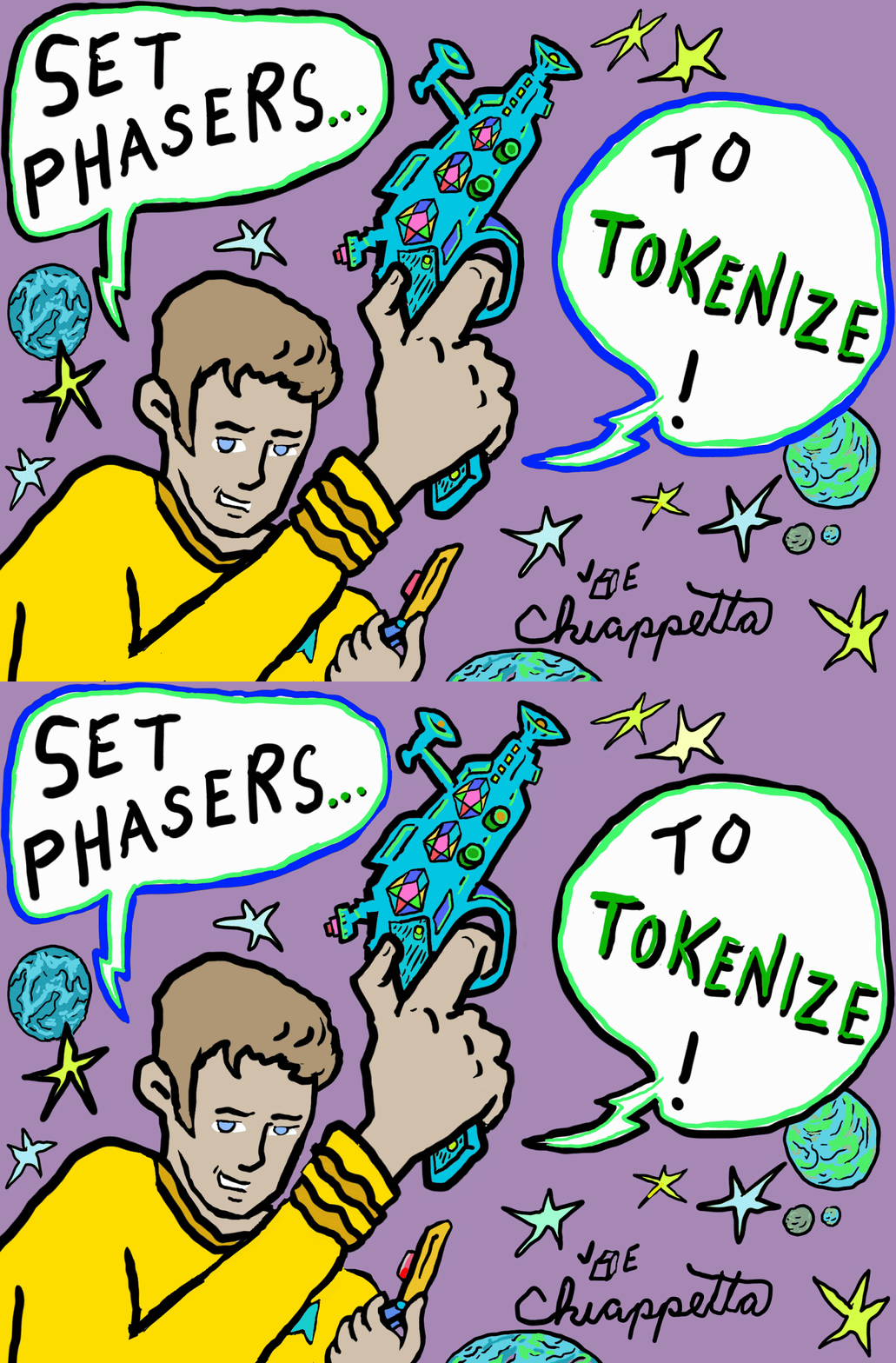
Tokenization: The Final Frontier

Tokenization: The Final Frontier is Rare Digital Art by Joe Chiappetta

This animated sci-fi image will soon be available as rare digital art on the Grand pixEOS Art Gallery. I drew it first as a quick sketch on my big old Samsung Galaxy Note 3. That's an over-sized phone that came with stylus and I have used it as a mini drawing pad reliably for almost 6 years. It seems fitting that a somewhat space-age handheld device was used to create this art inspired by space-age classic science fiction themes. Old shows such as Star Trek and others have become famous for introducing handheld devices that were decades ahead of their time.

Why would anyone want to collect rare digital art? We are speaking of monetizing digital art, which is an innovation ahead of its time--yet here now. Rare digital art is deserving of more attention and I do think someone should win a Nobel Prize in Economics for its inception. In fact, the benefits and interesting traits of rare digital art are worth listing all together. The below list can be used to help art collectors see the benefits of collecting rare digital art.

Characteristics of Rare Digital Art

  • Digital art can be issued in a limited supply (similar to limited-edition prints)
  • Instant or near-instant sales powered by the speed of blockchain
  • International market exposure
  • Digital art becomes a personal collectible item
  • Ownership data available to everyone
  • Ownership of digital art is transferable
  • Creators and collectors can set flat rate for art sales or accept bids
  • Royalties for secondary sales can be written into the blockchain so artist automatically receives a percentage of resale price each time a collector sells that artist's work to another collector
  • Artwork is as durable as the Internet, the blockchain that holds the art data, and the server(s) that stores the image
  • Art collectors can easily publicize their collection
  • Collectors can show people their collection in person from their own phones
  • Artists can easily keep track of art with release dates and any other data included in that art's release description
  • All sales final: non-reversible
  • Technology prone to attract new audiences, including younger audiences
  • Typically lower price of art (less art material cost) makes collecting art more accessible to wider range of collector income levels
  • Rare digital art has overlap with rare gaming items, increasing the potential for new art audiences 
  • Art can be static image or an animated piece
  • Artists are more likely to trade limited-editions with other artists
  • Artists can host giveaway art events without shipping or physical production costs
  • Physical art can be bundled with rare digital art as an option
  • Cryptocurrency price volatility may be a good thing (if crypto price goes up), or a bad thing. Yet even if a bad thing (as in the price of crypto goes way down) the artists involved still gain market exposure to new audiences.
I am sure there are more interesting traits to list about rare digital art, but these stand out right away. As can be seen, blockchain has opened up a whole new market for artists and collectors. Prior to blockchain technology, digital art images had very limited market venues for artists to release them in limited quantities. Art collectors have a hard time being interested in owning such art since images on the internet are easily copied. So there was no way to prove art ownership. Yet all that has changed!

Yes, any user can still simply copy and paste images onto their own devices. But that is not the point. Now, for collectors who want a way to collect digital art directly from an artist through an authorized and collectible means, the technology is here today to make that happen while also tracking ownership and date of sale. Furthermore, collectors have an authorized means of reselling that rare digital art to a new owner on the blockchain.

Physical art trade and exchange has always been possible. Now digital art trade and exchange is also possible. Transfer or ownership, bidding, discounting, limited supply... all those features that the physical art world has enjoyed have now come to rare digital art.

What Makes Rare Digital Art Possible?

Rare digital art means that on a blockchain, the cryptocurrency (or tokens) issued through these networks are now able to be linked to specific artworks. The artwork details get coded and recorded on the blockchain. This data is designed to last for the lifetime of that blockchain. In the same way that cryptocurrency creators can specify how many units of their cryptocurrency they will release to the world in a limited supply, and which users own which cryptocurrencies, the same features are now happening with digital art.

For example, on the Bitcoin blockchain, the total supply of Bitcoin has been coded to be 21 million. That means only 21 million Bitcoins will ever be in existence... and that's it. In similar fashion, digital art can now be linked to tokens on a blockchain that have a limited supply.

So take the above sci-fi art image I created. When I release it on a blockchain through pixEOS, it will be written into the code to issue this art linked to a limited supply of only 1 token. This is where the "rare" from the term "rare digital art" comes from. Once issued, only 1 image of "Tokenization: The Final Frontier" will ever be available to be bought and sold on that blockchain. Many can be copied infinitely. But only one copy can be monetized--the one image that I link to the blockchain, to be collected by only once collector at a time. Perhaps that one person will be you!

That is why I, along with many other rare digital artists, have "set phasers to tokenize!"

Joe Chiappetta
http://SillyDaddy.net

Silly Daddy Comics - Tuck In Time


Leave it to Silly Daddy Comics to deliver warm parenting and crypto-comedy all in the same non-fungible token family experience. Snuggle up to subtle financial education wrapped in a warm and fuzzy blanket of art and snacks.

This individual comic strip is available as rare digital art on the Portion marketplace. There you can buy it using Ethereum. Only 10 limited editions exist!

Joe Chiappetta
http://SillyDaddy.net

Bitcoin Frenemies: A Crypto Comic

Bitcoin Frenemies is a limited edition collectible blockchain card by Joe Chiappetta

The war for the future of money is on! Or will bitcoin and government-backed currencies learn to become reluctant friends, coexisting in our leather and digital wallets? This battle strikes at the financial nerves of many-a-person. We can at least shake on that.

My blockchain card, Bitcoin Frenemies, is now available on Book of Orbs in their CrystalsCraft collection. You can buy it as a limited edition piece of rare digital art using a cryptocurrency called BitCrystals. Only 200 editions will ever be available to own on the Bitcoin blockchain.

To see more of my crypto-collectibles, go to my Art page. That's my list of all the different rare digital art markets where I issue and sell new artworks. Note that on each different marketplace, I have all different works of art. That's all part of the scarcity of art on the blockchain.

Also feel free to read my introductory article about rare digital art and other crypto-art opportunities.

Joe Chiappetta

A Crypto Unicorn Is Born


Bitcoin + Unicorns + Crypto Comics = Instant Fun

For those not familiar with Southern California, I present a typical scene of our culture. Notice the colorful yet untamed creatures scheming for market domination. Marvel at the entrepreneurial ingenuity of these beautiful, sun-baked minds. Among the breathtaking backdrop of the rolling hills, catch that wild start-up spirit of boldness and natural ingenuity... or not.

But seriously, this crypto-art comic strip pokes fun at some of the sillier things going on in the never-boring cryptocurrency space. Consider this rare digital art as the lighter side of bitcoin and initial coin offerings (ICOs). If you are not sure what cryptocurrency or ICOs are, think bitcoin mutations gone wild--some are good, some are not. And if you are still not sure what any of that means, you should remain able to chuckle at the colorful wonders of Unicorn Coin!

You can buy this rare digital art on MakersPlace using Ethereum or a Credit Card. It is issued in a limited edition of only 10 copies.

My ultra-talented wife, Denise Chiappetta colored portions of this comic, and it just goes to show how much of a great colorist she is. Of course, I am happily married to this dear woman, so I might be slightly biased. She is actually good at whatever she puts her mind to do. Over the years she has colored hundreds of my comics excellently.

Parody of a Crypto Logo:

While this cartoon strip is obviously a parody, I do believe that having a solid logo plays a tiny part in whether or not a cryptocurrency will grow and achieve mass adoption. It must be a psychological thing, especially because all cryptos are digital; there is little tangibility so everything needs an image to gravitate towards. Consider all the various logos that stay in our minds throughout our lifetime; they must be communicating something on a subconscious level.

As for Unicorn Coin... well, communicating a few laughs is about all that it has in its favor. For the extra-curious art historians, readers can also see an early black and white version of this artwork in print on the pages of my giant-sized comic book, Silly Daddy Forever!

More Cryptocurrency Comics Needed:

I do understand that a number of my long-time Silly Daddy readers might remain perplexed at the concept of cryptocurrency and crypto-collectibles. Indeed, for many folks, this is strange, heavy, exciting, weird, and a little scary. It brings up a lot of strong emotion in people. To capitalize on these opportunities, and help people process these lightning-fast financial changes, more comics about Bitcoin, cryptocurrency, ICO drama, government regulations, and blockchain technology would go a long way in helping the rest of the population know the full scope of groundbreaking (as well as heartbreaking) things happening in the art-on-the-blockchain space.

To answer that call, I do hope you enjoy my funny comic strip view into this ever-growing economic paradigm shift. The monetary system is changing literally under our noses, and therefore we might as well have a few good laughs about it through the mighty medium of comics. While we educate ourselves about new dreams, nightmares, and other dramatics coming true in altcoin adventures, let's also laugh at the days to come with some comics. Cue up the crypto-cartoon unicorns.

Joe Chiappetta
http://SillyDaddy.net

Crypto Fly-By-Night Alliance


We can all strike a scenic pose and look good with the right props. Some creatures look poised to fly high at any moment. Meanwhile many claim to have the answers--to be filled with light. Yet with both of these scenarios, all too many folks never really get off the ground. And even more are full of only darkness.

I drew this crypto-art animation as social commentary. Am I taking an easy jab at the current state of cryptocurrency regulations and market volatility? Or is this comic about even deeper issues? Greed? Confusion? Fear? Recklessness? Disunity? Perhaps it is all of the above.

And if none of this makes sense, you can still enjoy the pretty colors. Yet it does seem fitting that this animation is actually issued as a one-of-a-kind piece of rare digital art on the SuperRare marketplace. Be dazzled!

Joe Chiappetta
http://SillyDaddy.net

Crypto Risky Business


I drew this comic to poke fun at the riskiness of not just crypto-businesses, but any business venture. I drew this cartoon in black and white using an ink brush at the Ethereal Summit in New York City in summer 2018. Then I colored it on my touch-screen computer and am now issuing it as a limited edition piece of rare digital art. You can bid on and perhaps buy this crypto-collectible using Ethereum at the SuperRare marketplace: https://superrare.co/JoeChiappetta

Some might even say that then you'd be joining me in a lifetime of risky business.

Why did I draw this particular piece of crypto-art? In the cryptocurrency space, there is often a popular perception that what people are doing is so much more risky than what other entrepreneurs are doing. From my perspective, I do not see it that way for the law abiding citizen. Perhaps some specific actions carry greater risk, but this is true for all business. Business is always risky, so crypto-business does not necessarily mean more risk.

Let me briefly explain my background. I worked at a major Chamber of Commerce for 8 years, consulting with many small businesses and entrepreneurs. Additionally, I have had my own small business (in publishing, training, and consulting) for most of my adult life and network with countless entrepreneurs--some whose businesses have survived, but many whose businesses have not!

Therefore, what I have learned in half a decade is that the business space--in general--is so uncertain and filled with surprises, competition, market upheavals, regulation changes, personnel glitches, and all sorts of unpredictable actions. Risk is part of life, whether you are selling stocks, art, shoes, T-shirts, or construction services. Uncertainties can be good, or bad.

So pass me the crypto.

Joe Chiappetta

Mega Debt-Busters: A Christian Guide to Financial Freedom

Get out of debt using Christian principles. See what the Bible says about debt in this practical how-to-get-out-of-debt guide.
Mega Debt-Busters book ordering page on Amazon by Joe Chiappetta
Order book from Amazon now.
Available in paperback or eBook.
Mega Debt-Busters book by Joe Chiappetta can help you get out of debt by the application of powerful spiritual truths. It will prepare your mind and your wallet for useful financial action that honors God.

Learn how to approach God and money as defined by Jesus, the author of life. See what the Bible says about debt in this Christian how-to guide by award winning author, Joe Chiappetta. It is a powerful and practical how to get out of debt guide. 

If you are in financial debt or just want help managing money from a spiritual perspective, this is for you. Tackle hidden greed, inefficiency, and even unidentified laziness in your life that will lead you to a balanced budget and a greater faith.

Whether it be known as "respectable" debt such as a home mortgage and student loans, or not-so-respectable debt such as maxed-out credit cards or overdue bills, you do not have to be a slave to our materialistic world or consumed with worry over the future of money. Say "no" to the false god of money. There is a way to be generous and live for God while still being responsible with the wealth he wants us to use for the advancement of his kingdom.

With God, patience, faith and discipline, you can bust out from under the shackles of your creditors and become debt-free. Mega Debt-Busters contains all the godly budgeting advice and financial tips from the original Debt-Busters edition plus 3 times more new material updated to overcome today's financial challenges.

Chapter titles from Mega Debt-Busters book:

  • Time and Chance and Wealth
  • The False god of Money
  • Money Gathered Little by Little
  • Greed in the Bible
  • Greed Is One Click Away
  • The Pride of Money
  • Debt in the Bible
  • Seven Action Steps to Debt Freedom
  • Lazy Enough
  • The-LORD-Is-With-You Factor
  • The Future of Money
  • Convicted by the Widow's Offering
Order book from Amazon now.

Bitcoin for Silly Daddy - A Journey into Cryptocurrency

Bitcoin for Silly Daddy - comic by Joe Chiappetta

How many years are we away from a scenario where paper money is frowned upon and even rejected?

Of course no person in their right mind would be so ungrateful (or foolish) as to turn down any form of currency as a gift. But there could come a time when early adopters of cryptocurrency actually prefer to receive money exclusively in bitcoin or other alternative digital currencies. What is Bitcoin? It's a new kind of encrypted digital currency that is already being used on a global scale. The future is here now. And it is not just limited to Bitcoin. There are many other rising digital assets that operate like coins, tokens, and currencies on a new and digital level. For example, Ethereum is another of these rising new cryptocurrencies to watch.

The Tribe of Crypto-Enthusiasts

Cryptocurrency users are usually highly proactive about how to help newcomers cross over to wider digital currency usage. More and more, cryptocurrency users will teach others how to understand and use these new assets. It's been going on for many years already. This is a rapidly expanding and real movement: the Bitcoin Movement, the Cryptocurrency Movement, the Digital Asset Explosion. The names may vary, but the results are world-changing, largely because avid users of these cryptocurrencies operate not unlike a tribe. These groupings of people with shared values are collectively bringing our culture to parts unknown.

While much excitement is associated with all of these digital innovations, no form of money or asset should ever be a cause to live for. People must live for things eternal, and helping others along the way. Nevertheless, every movement needs at least a few good cartoons. Here I offer a Cryptocurrency Movement cartoon from the Silly Daddy Comics Universe. You might even call this a cryptocomic.

As a cartoonist, I am looking with a keen eye to see the mediums in which cryptocurrencies like Bitcoin and Ethereum can advance and prosper for all parties involved, because creators and entrepreneurs can benefit from certain paradigm shifts. I remember when webcomics were a new concept in the beginning of the Internet. Early adopters were trying to figure out an easy way to send micropayments to creators. That never really got off the ground... until recently. Indeed, cryptocurrency and comics make a great combo for an online tipping platform. It will be fun to see what the future holds and watch as more people get on board the crypto-ship.

Calculated Risk


Before jumping in on the cryptocurrency bandwagon, there's a lot more information that a person must weigh out. Most investments (including buying things like Bitcoin) are really calculated risks. It's not much different than gambling, which is mostly about odds, chances, and even gut level feelings. But a calculated risk--an investment--in any cryptocurrency like Bitcoin or Ethereum is best done after a person reviews enough information to make an educated decision. Each person needs to determine if their level of risk is acceptable. The main difference between a gamble and a calculated risk is that with the latter, there are more concrete facts to absorb and assess first. Gratefully, there now exists a wealth of tools and analysis, both pro and con, available about cryptocurrencies so that educated decisions can be made. In the end, each person makes their own choice.

In the case of Bitcoin, Ethereum, and a number of other alt-coins, people who hold these assets right now do get a real value for it. This isn't a case of "maybe this will be worth something some day." These digital assets are worth something right now. In the case of Bitcoin, a holder of the cryptocurrency can even use it to buy all sorts of things instantly at this very moment online.

Peeking into the Crypto-Future

As for the future, only God knows what will really take root, whether it be Bitcoin, Ethereum, the US Dollar, or even some other cryptocurrency. Perhaps one day, I may even launch ComicCoin, or SillyDaddy Dollars as digital assets. Yet for now, based on all the information I have absorbed, I believe Bitcoin, Ethereum, as well as the US Dollar have a place in all of our futures. Despite controversy surrounding each of these currencies, they each have a lot of support and a lot of motivated people/organizations fighting diligently for each currency's perpetual establishment and expansion.

Therefore, unforeseen apocalyptic events aside, I imagine that there will be a significant place for cryptocurrency and the US Dollar in the years to come.